Three Poems by Brian Komei Dempster

CROSSING
No turning back. Deep in the Utah desert now, having left one home
to return to the temple of my grandfather. I press the pedal
hard. Long behind me, civilization’s last sign—a bent post
and a wooden board: No food or gas for 200 miles. The tank
needling below half-full, I smoke Camels to soothe
my worry. Is this where it happened? What’s left out there of Topaz
in the simmering heat? On quartzed asphalt I rush
past salt beds, squint at the horizon for the desert’s edge: a lone
tower, a flattened barrack, some sign of Topaz—the camp
where my mother, her family, were imprisoned. As I speed
by shrub cactus, the thought of it feels too near,
too close. The engine steams. The radiator
hisses. Gusts gather, wind pushes my Civic side
to side, and I grip the steering wheel, strain to see
through a windshield smeared with yellow jacket wings, blood
of mosquitoes. If I can find it, how much can
I really know? Were sandstorms soft as dreams or stinging
like nettles? Who held my mother when the wind whipped
beige handfuls at her baby cheeks? Was the sand tinged
with beige or orange from oxidized mesas? I don’t remember
my mother’s answer to everything. High on coffee
and nicotine, I half-dream in waves of heat: summon ghosts
from the canyon beyond thin lines of barbed wire. Our name
Ishida. Ishi means stone, da the field. We were gemstones
strewn in the wasteland. Only three days
and one thousand miles to go before I reach
San Francisco, the church where my mother was born
and torn away. Maybe Topaz in the desert was long
gone, but it lingered in letters, photos, fragments
of stories. My mother’s room now mine, the bed pulled blank
with ironed sheets, a desk set with pen and paper. Here
I would come to understand.
TEMPLE BELL LESSON
Son, I am weighted.
You are light.
Our ancestors imprisoned,
outcast
in sand, swinging
between scorching air
and the insult
of blizzards.
Their skin bronzed
and chilled
like brass,
listen
to their sorrow
ringing.
GATEKEEPER
Any noise alerts me. My wife Grace shifts beneath our comforter.
Respecting my uncles long dead, I climb from bed, grab
the bat, climb stairs, walk halls with a thousand sutras shelved
high, my grandparents’ moonlit ink floating on pages sheer
as veils, the word Love rescued from censors. In the nursery
I check window-locks, sense my son Brendan falling in and out
of seizures and sleep. Backed by the altar, its purple chrysanthemum
curtains, gold-leafed lily pads, corroded rice paper, I crouch
then stand at the window to watch silhouettes fleeing
past streetlamps, the gate unmoored from its deadbolt, unhinged
from ill-fitted screws and rusted nails. The front door cottoned
with fog shakes in night wind. Backyard bushes rustle. For now
I let the mendicants crack open our prickly crowns of aloe, soothe
their faces with gel, drop bottle-shards and cigarette butts that slash
and burn our stairs. Inside, we fit apart and together.
Grace and Brendan sleeping, me standing guard.
From my grandfather’s scrolls moths fly out, and I grab at air
to repel the strangeness of other lives circling toward us.
From Topaz (c) 2013 by Brian Komei Dempster.
Reprinted with permission of Four Way Books. All rights reserved.
An earlier version of “Gatekeeper” was first published in Parthenon West Review.
|
Topaz, Brian Komei Dempster’s debut poetry collection, examines the experiences of a Japanese American family separated and incarcerated in American World War II prison camps. This volume delves into the lasting intergenerational impact of imprisonment and breaks a cultural legacy of silence. Through the fractured lenses of past and present, personal and collective, the speaker seeks to piece together the facets of his own identity and to shed light on a buried history. |

- Published in Featured Poetry, home, Poetry, Series
IOWA
by Stephen Berg
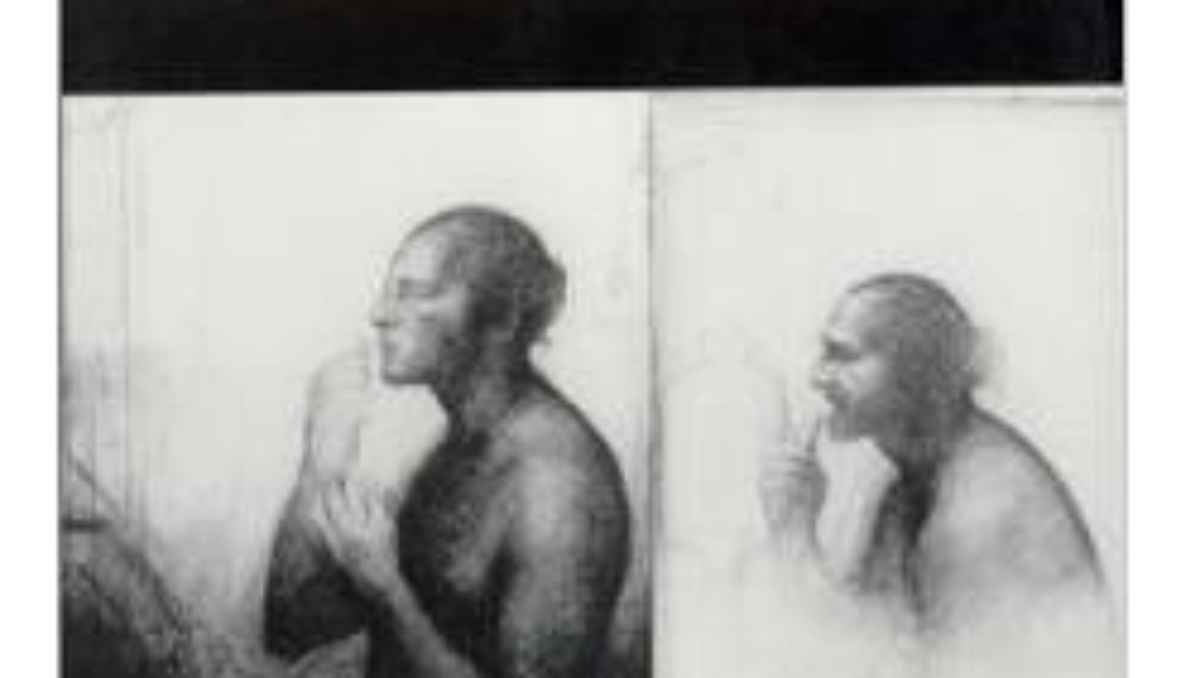
In honor of poet, teacher, editor, and Four Way Books author Stephen Berg, who passed away last week, we’re proud to re-print one of his prose poems, which first appeared in his collection, Shaving.
__________
IOWA
When I think of it now I still see just how ugly and dirty the place was, what a bare unprotected monk-like life it was that year, living first in the old tire warehouse on the outskirts of town, no toilet or sink, no furniture, nothing except two ratty mattresses, fruit crates, blankets from home, unfinished splintery lath walls, gobs of hard gray mortar squeezed between bricks, and everywhere the acrid stink of tire rubber, dirt and dust, everywhere in high black stacks truck tires, car tires, hundreds, except for one small room, probably an office once, where we slept and read. The teeth–like treads gleamed in the dark. Some nights I’d choke with asthma from the filth, from rage, from how far away home was. Some nights we’d lie in our room reading by the sallow light of the small bulbs of the bed lamps we got at a junk shop and nailed up on our walls. Outside the fields of Iowa went on forever, a ditch of yellow mud bordered the north wall. Some nights Bob and I would bundle up in everything we owned and go out and stare at the shoals of stars, pale surfy swarms pulsing slightly, stand half-drunk in the lampless cityless darkness rambling about poetry, family, sex, loneliness. Once, I remember, I took out an old silver Bach cornet I picked up in a pawnshop for 15 bucks and tried to play the thing, stood on the edge of the ditch leaning back, pointing the horn straight at the sky, but all that came were squawking mewing fartlike tuneless wails, jagged held notes. At one point—the horn against my lips—I took a wrong step into the ice-crusted watery slough and stumbled and fell and almost broke off my front teeth. For months I carried the mouthpiece in my pocket, fondling it, taking it out to heft, practicing on it to build my lip, fweeting a few raw notes whenever I felt like it—walking across campus, on the street. I kept myself company like that, I became somebody else, mostly Bix because I envied his sweet pure tone, the steadiness and range, his strict, condensed phrasing, the direct brevity of his style, a miraculously articulated, triumphant sadness. Before long we took an apartment in the heart of town—bought new mattresses, desks, two chairs, built bookcases with cinderblocks and boards—two rooms, high doors between, where we’d write, often at the same time early in the morning or late at night. It was wonderful being serious about writing, believing oneself able to hear someone hearing your voice, to hold a human gaze, wonderful feeling haunted, if you were lucky, by lines, impulses, hot formless combinations of phrases that led your hands over the keys at a speed beyond understanding, beyond experience. Then out would come the paper with words on it and you’d begin again—chop, change, shift, hack, put something back or stick it somewhere else, anything seemed possible in that mood—to hear the necessary mind of the poem. Otherwise it was classes and the usual college shit: football games, parties, gossip, worry about grades. Then the snow came and everything was lost under it, everything slowed. Sometimes it fell neck-deep. People wallowing through would shovel paths on the sidewalks. You’d see heads floating along the top of the snow walls. The quads and fields were cratered and scarred with ruts like a moon map glowing blue-white. Hard to describe the mood of Iowa City after one of those big snows, but I was happier than I knew then, trapped there, purified of choice by isolation, schedules breaking down, the roads out of town impassable. We’d stay up till three or four in the morning, playing pinball machines in an all-night diner a few blocks away, or reading, trying to write. The vividness of words on a page in a book, the sound of the human on a printed page, was never more compelling and intense than on those long nights of immense calm while the snow under the street lamps lay there, consolingly white and quiet, going on for miles. The Workshop quonsets looked like sleeping animals, down by the Iowa River. You could walk across it and not break through; you could see the wide brown road of water underneath roiling past. The uncountable rows of footprints crossing and recrossing, the snowy lid of ice, made my scalp prickle. It looked eerie, too meaningful—why, I still can’t figure out—that bright, pocked, luminous crust scored by those shadowy holes. And nothing came there, not at night in the bleak Midwestern cold, unless an animal happened by. At night if you drove out of town (after the roads were plowed, snow mounded ten feet high on either side), where it seems nothing exists but fields, endless open fields, if you looked across the glowing sugary land, you might say that the silence and peace you were at one with had always been and always would be.
|
“. . .Stephen Berg’s Shaving is the first book of prose poems I have read that has made me re-examine the function and power of that branch of our poetry. It is a book of strenuous and often dangerous self-witness; an astounding overview of American urban life at the apex and turning point of a major civilization. . .most importantly, it is brilliantly written. . .In reading Berg you will be reading the master of the prose poem. – Jorie Graham |
- Published in Featured Poetry, home, Series
Three Poems by Sam Sax
I.35
i watch him touch him self over a screen
and pretend it is with my hands
how you pull a quiver from an arrow.
he moans and i grow jealous of the satellites.
their capacity for translation, to code his sound
in numbers unbraiding in my speakers
lucky metal audience of cables.
i know the wireless signal is all around me,
that i’m drowning in his unrendered noise.
how from a thousand miles away i can dam
myself with the light spilling from his hands.
what magic is this? distance collapsed
into the length of a human breath. what witchcraft?
six years ago a bridge between us collapsed
the interstate ate thirteen people alive
asphalt spilling like amputated hands
into the dark below. what is love but a river
that exists to eat all your excess concrete
appendages? what is a voice but how it lands
wet in the body? what is distance
but a place that can be reshaped through language?
how i emulate and pull a keyboard from the ashes.
how i gave him a river and he became it’s king.
how any thing collapsed can be rebuilt.
take our two heaving torsos take them
how they fall like a bridge into the water
how they rise up alone from the sweat.
BILDUNGSROMAN (SAY: PYOO-BUR-TEE).
i never wanted to grow up to be anything horrible
as a man. my biggest fear was the hair they said
would burst from my chest, swamp trees
breathing as i ran. i prayed for a different kind
of puberty: skin transforming into floor boards,
muscle into cobwebs, growing pains sounding
like an attic groaning under the weight of old
photo albums. as a kid i knew that there was
a car burning above water before this life,
that i woke here to find fire scorched my
hair clean off until i shined like glass – my eyes,
two acetylene headlamps. in my family we have
a story for this. my brother holding me
in his hairless arms. says, dad it will be a monster
we should bury it.
MONSTER COUNTRY
god bless all policemen & their splintering night sticks splintering & lord
have mercy on their souls. god bless judges in their empty robes who send
young men off to prisons with a stain from their antiquated pens. god bless
all the king’s monsters & all the kings men. god bless the sentence
& its inevitable conclusion. god bless the predators, curators of small
sufferings. god bless the carpet that ate one hundred dollars of chris’s
cocaine. god bless cocaine & the colophon of severed hands it takes
to get to your nostrils. god bless petroleum & coffee beans & sugar cane
& rare earth minerals used to manufacture music boxes. god bless the gas
chamber & the gas that makes the shower head sing. god bless the closet
i trapped a terrified girl in with my two good hands. god bless the night
those good boys held my face to a brick wall & god bless those boys
& good god bless the strange heat that pressed back.
you cannot beg
for forgiveness
with a mouth
A Guide to Undressing Your MonstersComing soon from
“Sam Sax’s poems are ravenous, intimate, and brutal. God is ‘a man with a dozen bleeding mouths’ and ‘a boy drags his dead dog across the night sky’ and ‘shadows sing.’ Tongued and loved, a butthole becomes a trumpet, a second mouth. His poems reject the given. His poems seek out new encounters between flesh and world, between language and memory. Bristling with stunning images and formally astute, his poems nurture and bruise.” ~ Eduardo Corral |

- Published in Featured Poetry, home, Poetry, Series
Three Poems by Collier Nogues
MISSISSIPPI
I know forgetting myself is a good thing, the best loss.
The trees look soft in the fog’s distance, egg-colored light
all over them. Even the sheep,
eggy.
The earth dries in ribs the rain has drawn on it.
Trees here grow up out of the water. Too little light
to tell what color but the ground that isn’t shining is made of leaves.
So these pools are mirrors:
were it on earth as it is in heaven,
blue land of we-will-all-meet-at-the-table,
I could be for other than myself successfully
without first having to lose someone I love.
THE FIRST YEAR IN THE WILDERNESS
i. Spring
My friend’s little daughter was pulled
under.
What began as a single
instance of labor became
circular:
the child’s mother on her hands
and knees, pushing
floor wax into tile grout
across the emptied house.
ii. Summer
Every window
hung with stained glass crosses
casting rainbows,
coloring
the throw rug and the wall.
Men. Silence,
great crashes of noise at long intervals.
The cat sacked out on the floor.
iii. Fall
Her prayer:
My preparations have outlasted
your stay,
so I have not only
the afterglow of you but also
little signs still
that you are bound for me.
iv. Winter
The only place open after midnight:
tall-stalked bar stools,
the valley laid into the wood
of the wall.
We stayed up
with the lottery sign’s crossed fingers,
while the animals
lay down in the field.
EX NIHILO
The beginning is spring.
The lanes are lined with poplars who lose their leaves to winter
but to whom nothing further wintry happens.
I design it so the marriage lasts as long as the lives,
and the children outlive their parents.
They are all startlingly easy to make happy. They recover
from unease like lightning.
When it falls apart my frustration is like a child’s,
unable to say, unable to make something
happen by saying.
To speak in someone else’s voice is a pleasure, but not a relief.
My tongue burns in its cavity.
My recreation of us is unforgivable
in the sense that I am the only one here to forgive it.
|
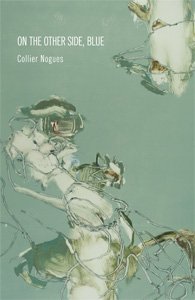
“Collier Nogues is a rare poet in the contemporary landscape. Her work is rife with the quick jump-cuts and fragments many young poets favor, but there’s no cynical irony for irony’s sake in her poems. This is poetry that earnestly engages with life’s big questions….A poet is, among other things, a protector of thoughts, a kind of police officer of the inner world. Nogues… makes it a little safer to think, a little less frightening and lonely.” — Craig Morgan Teicher from “Introducing Collier Nogues” in Pleiades, Volume 30 Number 1, 2010 |
- Published in Featured Poetry, home, Poetry, Series
Three Poems by Melissa Ginsburg

THE JOB
Not being stupid
I took what was offered: the job
was waiting and I did it
with sand and mirrors, in glitter
while I paced. I waited, I fell
in love with waiting
covered in jewels washed
in from the sea. Summer
kept me in sugared fruits,
shiny shells, mother-of-pearl.
My job was undressing
the sea, what it wanted, shovel
and droplet turned sun to roving dots.
Waiting threw its necklace back,
was work, was softened glass.
BIRTHDAY
I dug a shallow wide hole in the yard
for a tree that might grow or an animal’s grave.
Dog in the hole, white fur and fill dirt.
Better to bury it. It was my birthday.
A dogwood in winter has berries the birds like.
A winter rose in the window. A sugar
rose. We will take it in the snow. We’ll fill
a hollow log with heated rocks.
It is my birthday. It keeps on, it occurs.
For my birthday I am given a window.
By you I am given. A view, a gift, a tree, a dog,
a stone. Everything I have I give to winter.
MERMAID
Flood deeps the shallows.
The rivers get covered.
We difficult our dinners.
In times of hunger, if only
a rock on which to perch.
In sleep we choose a dream:
lure a gull and water lock it,
meet a boy and get feet.
|
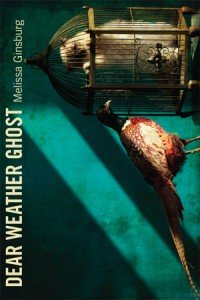
“Like syntactical pinwheels, Ginsburg’s word choice disorients then reorients the reader in a new, slightly off-kilter universe. Like a perennial Alice through the looking glass, for the speaker, seeing the world, let alone being in the world is not a habit. The speaker sees the world in its particularity: birds animate cables; light, dust and shadow are caught in the dearth of a moment. Ginsburg’s vision—embracing everything and refusing nothing—gives the collection its spine.” ~ Review by Amy Pence, online at The Rumpus |
- Published in Featured Poetry, home, Poetry, Series
Two Poems by Yona Harvey

GINGIVITIS, NOTES ON FEAR
I hesitate invoking that doubled emptiness: open—
my daughter’s mouth in the bathroom mirror—
not her first vanity but first blood inkling
she tastes & smoothes with her tongue. She turns
her chin this way & that, anticipating her future: new
bones replacing the fallen. If the body survives,
it repairs itself: two pillars—wider, stronger
forming new words: adolescent declarations
brushing past seasoned gums
What is the tongue- span
between trauma & terror?
Incident & accident?
Think on these things.
There is so much to fear. How will we fear it all?
& now my second-born, my son: If I don’t
brush, he says, a disease will attack my gums.
When God says, “Meet me tomorrow
at the corner of Seventh Day & Salvation
just as the sun before nightfall strikes
the fender of a red hatchback parked
outside Worldwide Washateria,” you
wait there
fitted in a dress the color of cloud-cover
& hold a feathered hat
to your delicate hair, newly picked &
haloed with a small brim. &
like a fleck of Antique Black in a gallon
of European White, you make everything
around you
more
like itself, which means you
appear
more
eloquently than the lampposts
boasting their specters of light,
or the woman
clutching her daughter’s shirt
above a basket, the sedative twilight
of the gods trapped momentarily
in the pane, which separate
the woman
& you
steadfast against the wind picking up,
the men desiring your attention,
the traffic held
in the ceaseless straight ahead.
Concrete barriers, a few
lopsided cones, abiding
highway hieroglyphs
are all that separate
onward & stalled, here & gone.
Not even this poem
can move you, or change
the motion of your scarf—
that furious red flag—
or the stilts—your legs.
Your lips
don’t move—you
do not mutter or
complain or ask directions.
Why don’t you?
Your autograph haunts
the covers of books
across town:
I know who I am I know who I am I know who I am
You,
Black-winged bird,
you’ve become
lyrics layering air:
1—
Describe the sound of His voice.
2—
To walk the black, wired bars
3—
is to follow a sound
1—
so peculiar you
2—
hardly notice
3—
the ink gone out.
1—
2- 3- 1- 2- 3- 1- 2- 3- 1-
Your stilts on the ground.
|
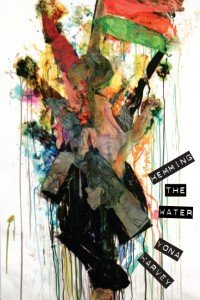
Channeling the collection’s muse—jazz composer and pianist Mary Lou Williams—Hemming the Water speaks to the futility of trying to mend or straighten a life that is constantly changing. Here the spiritual and the secular comingle in a “Fierce fragmentation, lonely tune.” Often mimicking fairy tales or ancient fables, Yona Harvey inhabits, challenges, and explores the many facets of the female self—as daughter, mother, sister, wife, and artist—both on a personal level (“To describe my body walking I must go back / to my mother’s body walking”) and on a cultural level (“A woman weighs the price of beauty—”). |
- Published in Featured Poetry, home, Poetry, Series
ANTIPHON FOR THE OFFICE OF THE DEAD by William Kelley Woolfitt

a powder box and swans-down puff
her limp stocking, a green satin fan
spangled with dragonflies, curling-tongs
small muslin bags, a pumice stone
bits of skin, cut-glass bottles, cuticle
knife, a darner, nail powder, sealing wax
spirals of her hair, glove buttoner
orangewood stick, gauze balls, shoe lift
velvet brush, rabbit’s foot, pots of rouge
lip salve, cold cream plumbed by her
tired fingers, silver trays of hatpins
hairpins, safety pins, to hold, to prick
foxtail scarf with chain, scrimshaw
manicure box with sweet pea vines
carved in the whale-bone lid, hand-mirror
holding her breath, a smudged cloud
Back to Table of Contents
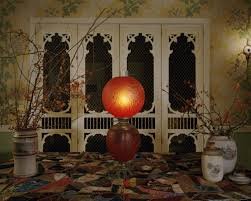
Aaron Blum, “Bittersweet.” (Photograph)
William Kelley Woolfitt chose this original photograph by Aaron Blum to accompany his poem. The poet explains: “I gave this poem its current title after reading Traci Brimhall’s wonderful ‘Dirge for the Idol.’ I had imagined an altar-like dressing-table laden with the dead parts of humans and other animals; naming the poem ‘Antiphon for the Office of the Dead’ was my way of naming that table a place of commemoration and lament. I see another kind of altar in Aaron Blum’s photograph ‘Bittersweet,’ a suggestion of mourning and mending, with a lamp that may burn for the lost and the quilt-like table runner that may gather pieces of the old and put them together again.”
- Published in Featured Poetry
DOLOROSA by Molly Rose Quinn

(The Chapel at St. Mary’s School for Girls)
where the pillar falls at the edge of morning the teachers
beg us to tug down our skirts they offer their palms
for our gumballs and your god is here to say that beauty
is easy like cutting teeth and your legs and your legs
and yours and I in the pew wish to scrape down
to nothing cuff myself kneel better and what could be
worthier hair voice and loudly I beg for ascendancy
dear classmates your legs in neat rows pray as you do
with fists up and the sun in here bare pray for safety
the teen saint she is the girl to win it all for I beg my
mariology as she sets the way that girl she never once
begged for sparing she begged for death like wine
she begged the best she supplicated she died this dying
begs for me I give it such pleasure and legs and the pew
and the alb and the bread and all other objects beg to be
candles when you are a candle you can beg to be lit
each of you in the pew you beg to be lit I’ll never shine
bigger as we know teenagers beg to be begged and we do
you girls you begged me to hold you begged me to take
what I took you beg bigger and better and for that
you’ll be queens the chimes chime and bells bell
and dear god I know I can be the greatest girl ever
by anointing all alone and being loved the very best
and she says what is so good about anger god killed
my son for himself I suppose and this halo it’s nothing
I asked for and of course she’ll be lying and your legs
and your legs and yours tanned and the best thing all year.
Listen to Molly Rose Quinn’s reading of “Dolorosa” below…
[soundcloud url=”http://api.soundcloud.com/tracks/84736202″ params=”color=ff6600&auto_play=false&show_artwork=false” width=” 100%” height=”166″ iframe=”true” /]
Back to Table of Contents

Henry Darger, Sacred Heart. ©Kiyoko Lerner 2013 / Artist Rights Society (ARS), New York. (Click to enlarge.)
Molly Rose Quinn selected Henry Darger’s work to accompany her poem and explains: “The girls of Henry Darger’s epic novel, illustrated here in Sacred Heart and elsewhere, were closely derived from popular media (recall the ‘Coppertone baby’ or ‘Morton Salt girl’). The novel itself, undiscovered until Darger’s death, details the girls’ war against child slavery, neglect, and abuse. They are cartoonishly feminine in appearance, divine in their acts, and pure of moral being. The narrative weaves darkly into Christian mythology and Darger’s childhood experiences. My poem, using Mary as its vessel, hopes to crash together female adolescence and religious fundamentalism, therein the inherent mythologizing, fetishism, zeal, envy, lust. I am drawn to these images for their moralizing, their uncertain deviance, their mystic pity, and the great heart’s wink at the literal.”
Please note: Reproduction, including downloading of Henry Darger’s work, is prohibited by copyright laws and international conventions without the express written permission of Artists Rights Society (ARS), New York.
- Published in Featured Poetry, Issue 3