INTERVIEW WITH MÓNICA GOMERY

Mónica Gomery is a rabbi and a poet based in Philadelphia. Chosen for the 2021 Prairie Schooner Raz-Shumaker Book Prize in Poetry, judged by Kwame Dawes, Aimee Nezhukumatathil, and Hilda Raz, her second collection, Might Kindred (University of Nebraska Press, 2022) skillfully interrogates God, queer storytelling, ancestral influences, and more.
FWR: Would you tell us about the book’s journey from the time it won the Prairie Schooner Raz-Shumaker Book Prize to when it was published? In what ways did the manuscript change?
MG: The manuscript didn’t change too much from submission to publication, though it changed a lot as I worked on it in the years prior to submitting it. Kwame Dawes is a very caring editor, and he really gave the poems space to breathe. His edits largely came in the form of questions. They were more about testing to see if I had thought through all of my decisions, guiding me toward consistency. The copy editing at the end was surprisingly tough. I realized how sculptural poetry is for me, how obsessive I am about the shape of poems on the page, and the visual elements of punctuation and lineation. I spent hours making decisions about individual commas – putting them in, taking them out, putting them back in… This was where I felt the finality of the book as an object. I experience a poem almost as a geological phenomenon, a shifting ground that responds to tectonic movement beneath it, a live landscape that moves between liquid and solid. Finalizing the details of these poems meant freezing them into form, and it was hard to let go of their otherwise perpetual malleability.
The last poem to enter the book came really late. I wrote “Because It Is Elul” in the summer of 2021. Right at the last possible moment, I sent Kwame two or three new poems that I was excited about and asked if he thought I could add them. He told me to pick one new poem and add it to the book, and otherwise, to take it easy – that these new poems were for the next collection, and to believe that there would be a next collection. That was a moment of deeply skilled mentorship; his ability to transmit a trust and assurance that this wouldn’t be the end, that we’re always writing toward the next project, the next iteration of who we’re becoming as artists. It meant a lot to hear this from such an incredible and prolific writer. It settled me and helped me feel the book could be complete.
FWR: When did you first start submitting Might Kindred to publishers and contests? I would love to hear about your relationship with rejection and any strategies you may have for navigating it in your writing life.
MG: I started writing the poems in Might Kindred in 2017 and began submitting the manuscript as a whole in 2021. I’m a slow drafter, and it’ll take me years to complete a poem. So too for a manuscript – the process feels extremely messy while I’m in it, but I’ve learned that what’s needed is time, and the willingness to go back to the work and try again. With my first round of rejections, I wondered if I’d compost the entire manuscript and turn to something to new, or if I’d go back in and refine it again. The rejections rolled in, but along with them came just enough encouragement to keep me going – kind reflections from editors, being a finalist multiple times – and then Kwame Dawes called to tell me Might Kindred was accepted by Prairie Schooner for the Raz/Shumaker Prize.
On my better days, I think rejection is not just an inevitable part of the creative process, but a necessary one. Which isn’t to say that I always handle rejection with equanimity. But it has a way of pulling me back to the work with new precision. It generates a desire in me to keep listening to the poem, to learn more about the poem. In some ways, this is the only thing that makes me feel I can submit in the first place – the knowledge that if a poem isn’t quite ready, it’ll come through in the process. It’ll boomerang back for another round of revision. Rejection removes the pressure to be certain that a poem is done.
Jay Deshpande once told me that every morning, a poet wakes up and asks themselves: Am I real? Is what I’m doing real? And that no matter the poet’s accomplishments, the charge behind the question doesn’t change. So, we have to cultivate a relationship to our practice as writers that’s outside of external sources of permission or validation. Jay offered that the poet’s life is a slow, gradual commitment to building relationships with readers – which I understood as an invitation to pace myself and remember to see the long arc of a writing life, as opposed to any singular moment in time that defines one’s “success” as a writer. I try to remember this when I come up against my own urgency to be recognized, or my tenderness around rejection. I want to write for the long haul, so, I have to try and value each small bright moment along the way. Every time I find out that someone who I don’t already know has read one of my poems, my mind is completely blown. Those are the moments when poetry is doing its thing– building community between strangers, reaching across space and time to connect us. And I think that’s what makes us real as poets.
FWR: In “Immigrant Elegy for Avila,” you refer to mountain as a language. You return to the imagery in “God Queers The Mountain”. Would you talk a little about how the mountain came to be a part of your creative life?
MG: Some of it is memory work. As a child, my relationship to Venezuela, when I reach for it in my mind’s eye, had to do with feeling very small in the presence of things that were very large– driving through the valley of El Ávila to get to my grandparents’ houses, swimming in enormous oceans. Since this book reaches back toward those childhood memories, and wonders about being a person from multiple homelands, the mountain started showing up as a recurring presence. The mountain was a teacher, imparting certain truths to me by speaking to me “in a mountain language” that I received, but couldn’t fully translate. This is what it feels like, to me, to be a child of immigrants–– all this transmission of untranslatable material.
Some of it is also collective memory, or mythic memory work. The mountain in “God Queers the Mountain” is Sinai, where the Jewish people received Torah and our covenant with God. That poem seeks to reclaim Mt. Sinai as a site of queer divinity and queer revelation. Similarly, this feels like an experienced truth that’s not easily rendered into English.
On the cover of Might Kindred is a painting by Rithika Merchant, depicting a person’s silhouette with a natural scene inside of them. The scene crests on a hilltop and overlooks the peak of a mountain, painted right there at the heart of the mind. The mountain in the painting is against a thick night sky, full of constellations and a red harvest moon. I can’t tell you how true this painting feels to me. Going back to Mt Sinai for a moment, in Torah it’s the meeting point between earth and heaven, where the divine-human encounter happens. It’s a liminal, transitional space, where each realm can touch the other, and it’s where the people receive their relationship to the divine through language, mediated by text. I love the claim, made by Merchant’s painting, that this meeting point between earth and sky, human and heavenly, however we want to think about, lives within each of our bodies. The possibility of earth touching heaven, and heaven touching earth, these are longings that appear in the collection, played out through language, played out at the peak of the mountain.
FWR: I love that “Prologue” is the eighth poem in the collection. Some poets may have chosen to open the collection with this poem, grounding the reader’s experience with this imagery. What drove your choice of placement? How do you generally go about ordering your poems?
MG: You’re the first person to ask me this, Urvashi, and I always wondered if someone would! Ordering a collection both plagues and delights me. I’m doing it again now, trying to put new poems into an early phase of a manuscript. Lately I’m struggling because every poem feels like it should be the first poem, and the placement of a poem can itself be a volta, moving the book in a new direction. The first handful of poems, maybe the first section, are like a seed– all the charged potential of the book distilled and packed tightly within those opening pages, waiting to be watered and sunned, to bloom and unfold. There’s a lot of world-building that happens at the beginning of a poetry collection, and one of the rules in the world of Might Kindred is the non-linearity of time. By making “Prologue” the eighth poem, I was hoping to set some rules for how time works in the book, and to acknowledge the way a book, like a person, begins again and again.
At one point, I had Might Kindred very neatly divided by subject: a section on Venezuela, a section on Queerness, a section rooted in American cities, a section about my body, etc. I shared it with my friend Sasha Warner-Berry, whose brilliance always makes my books better. She told me, “The poems are good, but the ordering is terrible.” Bless her! I really needed that. Then she said, “You think you need to find subject-based throughlines between your poems, to justify the collection, but the throughline is you. Trust the reader to feel and understand that.” It was a mic drop. I went back to the drawing board, and ordering became an intuitive process: sound-based, sense-based, like composing a musical playlist.
I want to think about the space a reader inhabits at the end of each poem. I want to feel and listen into that silence, tension, or question, and then respond to it, expand upon it, or juxtapose it, with what comes next. I also used some concrete tools. I printed each poem out as a half-pager, so that it was tiny and easy to move around on a floor or wall. I marked and color-coded each poem with core motifs, images, and recurring themes. This helped me pull poems together that spoke to one another, and also to spread out and braid the themes. Similarly, I printed out a table of contents, and annotated it, to have that experience of categorizing poems from a birds-eye-view.
FWR: There are four poems, scattered throughout the book, titled “When My Sister Visits”. These short poems are some of the most elusive and haunting poems in the text. Would you tell us about the journey of writing these linked poems?
MG: These poems began after a visit I’d had with my friend and mentor, Aurora Levins-Morales. I hadn’t seen her in a long time, and I was living in Chicago, where I didn’t have a lot of close people around me. Aurora came to town, and we did what we always do– sit and talk. On this visit, she also showed me around her childhood neighborhood in Chicago, including the house she’d lived in as a teenager, and the streets she’d walked as a young feminist, activist, and poet. It was a very nourishing visit, and afterward when I sat down to write, the first words that came to me were, “When my sister visits…” This was interesting because Aurora isn’t my sister. She’s my elder, teacher, and friend, so I knew something about the word sister was working in a different way for me, almost as a verb. What does it mean to be sistered by someone or something? This question came up recently in a reading I did with Raena Shirali. Beforehand, we both noticed the recurring presence of sisters in one another’s books, and we deliciously confessed to each other over a pre-reading drink that neither one of us has a biological sister. The word sister has a charge to it, I think especially for women.
At first, I wrote one long poem, excavating the presence of a shadow sister in my life who appears to accompany me and reflect parts of myself back to me, especially parts of me that I think shouldn’t be seen or given voice to. This sister embodies my contradictions, she asks hard questions. I was drawn to writing about her, somehow through that visit with Aurora, in which I felt that I belonged with someone, but that the belonging was fraught, or pointed me back to my own fraughtness.
This poem was published in Ninth Letter in the winter of 2020, under the title “Visit,” and I thought it was finished! Later, I worked with Shira Erlichman on revising the poems that became Might Kindred. Shira invited me to return to seemingly completed poems and crack them open in new ways. Shira’s amazing at encouraging writers to stay surprised. It’s very humbling and generative to work with her. So, I chopped the original sister poem up into smaller poems and kept writing new ones… Shira advised me to write fifty! This gave me the freedom to approach them as vignettes, which feels truer to my experience of this sister in my life– she comes and goes, shows up when she wants to. She’s a border-crosser and a traverser of continents, she speaks in enigma and gets under my skin, into my clothes and hair. Bringing her into the book as a character felt more accurate when this poem became a series of smaller poems, each one almost a puzzle or a riddle.
FWR: Ancestors, especially grandmothers, have a powerful presence in these poems. What did you discover in the course of writing these poems? What made you return to these characters over and over?
MG: In Hebrew, the words av and em mean father and mother, and also originator, ancestor, author, teacher. The word for “relation” is a constellation of relationships, which expands the way we might think about our origins. This helps me find an inherent queerness at work in the language of family– how many different ways we may be ancestored by others. And at the core of their etymology, both words mean to embrace, to press, to join. I love this image of what an ancestor is: one who embraces us, envelopes or surrounds us, those whose presences are pressed up against us. We are composite selves, and I think I’m often reaching for the trace of those pressed up against me in my writing.
Might Kindred is driven by a longing for connection. Because the book is an exploration of belonging, and the complexity of belonging in my own life, ancestors play a vital role. There are ancestral relationships in the book that help the speaker anchor into who she is and who and what she belongs to, and there are ancestral relationships in the book that are sites of silence, uncertainty, and mystery, which unmoor and complicate the possibility to belong.
Also, belonging is a shifting terrain. I wrote Might Kindred while my grandmother was turning 98, 99, then 100, then 101. In those years, I was coming to accept that I would eventually have to grieve her. I think there was an anticipatory grieving I started to do through the poems in this book. My grandmother was the last of her generation in my family, she was the keeper of memories and languages, the bridge from continent to continent, the many homes we’ve migrated between. Writing the book was a way of saying goodbye to her and to the worlds she held open for me. There are many things I say in the pages of Might Kindred, addressed to my grandmother, that I couldn’t say to her in life. I wasn’t able to come out to her while she was alive, and in some ways the book is my love letter to her. The queerness, the devotion, the longing for integration, the scenes from her past, our shared past, the way it’s all woven together… maybe it’s a way of saying: I am of you, and the obstacles the world put between us don’t get the final word.
Lastly, I’ll just say, there are so many ways to write toward our ancestors. For me, there’s a tenderness, a reverence, and an intimacy that some of these poems take on, but there’s also tension and resistance. Some of the poems in the book are grappling with the legacies of assimilation to whiteness that have shaped my family across multiple journeys of immigration – from Eastern Europe to Latin America, from Latin America to the US. I harbor anger, shame, heartbreak, disappointment, confusion, and curiosity about these legacies, and poetry has been a place where I can make inquiries into that whole cocktail, where I can ask my ancestors questions, talk back to them, assert my hopes for a different future.
FWR: Three of your newer poems appear in Issue 25 of Four Way Review and I am intrigued by the ways in which there’s been this palpable evolution since Might Kindred. Is that how you see it too, that you’re writing from a slightly different place, in a slightly altered register?
MG: Yes, I do think there’s a shift in register, though I’d love to hear more about it from your perspective! I know something of what’s going on with my new writing, but I’m also too telescoped into it to really see what’s really happening.
I can definitely feel that the first poem, “Consider the Womb,” is in a different register. It’s less narrative, equally personal but differently positioned, it’s exploring the way a poem can make an argument, which has a more formal tone, and is newer terrain for me. It uses borrowed texts, research and quotations as a lens or screen through which to ask questions. I’m interested in weaving my influences onto the page more transparently as I write new poems. This poem is also more dreamlike, born from the surreal. It’s holding questions about the body, generativity, gender roles and tradition, blood, birth and death, the choice to parent or not. I think the poem is trying to balance vulnerability with distance, the deeply personal with the slightly detached. Something about that balance is allowing me to explore these topics right now.
The other two poems take on major life milestones: grieving a loss and getting married. I’m thinking of some notes I have from a workshop taught by Ilya Kaminsky – “the role of poetry is to name things as if for the first time.” Loss and marriage… people have been writing poems about them for thousands of years! But metabolizing these experiences through poetry gives me the chance to render them new, to push the language through my own strange, personal, subjective funnel. Kaminsky again: “The project of empire is the normative. The project of poetry is the non- normative.” There are so many normative ways to tell these stories. Ways to think about marriage and death that do nothing to push against empire. I think my intention with these two poems was not to take language for granted as I put them onto the page.
FWR: Is there a writing prompt or exercise that you find yourself returning to? What is a prompt you would offer to other poets?
MG: I once learned from listening to David Naimon’s podcast Between the Covers about a writing exercise Brandon Shimoda leads when teaching, and it’s stayed with me as a favorite prompt. He would have his class generate 30 to 50 questions they wanted to ask their ancestors, and go around sharing them aloud, one question at a time, “Until it felt like the table was spinning, buoyed by the energy of each question, and the accumulation of all the questions.”
As you pointed out, writing with, toward, and even through, my ancestors, is a theme of Might Kindred, and I think it’s one of the alchemical transformations of time and space that poetry makes possible. I love Shimoda’s process of listing questions to ancestors, which feels both like a writing exercise and a ritual. It draws out the writer’s individual voice, and also conjures the presence of other voices in the room.
I’ve used this exercise when teaching, credited to Shimoda, and have added a second round– which I don’t know if he’d endorse, so I want to be clear that it’s my addition to his process– which is to go around again, students generating a second list of questions, in response to, “What questions do your ancestors have for you?” I’m interested in both speaking to our ancestors and hearing them speak to us, especially mediated through questions, which can so beautifully account for those unfillable gaps we encounter when we try to communicate with the dead.
In Might Kindred, there’s a poem called “Letter to Myself from My Great Grandmother” that was born from this kind of process. It’s in my ancestor’s voice, and she’s asking questions to me, her descendent. My book shared a pub day with Franny Choi’s The World Keeps Ending, and the World Goes On, which I think is an astonishing collection. In it, she has a poem called “Dispatches from a Future Great-Great-Granddaughter.” In the poem she’s made herself the ancestor, and she’s receiving a letter, not from the past but from the future, questions addressed to her by her future descendent. I’m in awe of this poem. She models how ancestor writing can engage both the future and the past, and locate us in different positions– as descendent, ancestor, as source or recipient of questions. The poem contains so many powerful renderings and observations of the world we live in now– systems, patterns, failings, attempts. She could have articulated all of these in a poem speaking from the present moment, in her own present voice. But by positioning her writing voice in the future, she creates new possibilities, and as a reader, I’m able to reflect on the present moment differently. I feel new of kinds of clarity, compassion, and heartbreak, reading toward myself from the future.
These are the questions I return to, that I’d offer other writers: Think of an ancestor. What’s one question you have for them? What’s one question they have for you? Start listing, and keep going until you hit fifteen, thirty, or fifty. Once you have a list, circle one question, and let it be the starting point for a poem. Or, grab five, then fill in two lines of new text between each one. Just write with your questions in whatever way you feel called to.
FWR: Who are some of your artistic influences at the moment? In what ways are they shaping your creative thoughts and energy?
MG: Right now, I’m feeling nourished by writers who explore the porous borders between faith and poetry, and whose spiritual or religious traditions are woven through their writing in content and form. Edmond Jabés is a beacon, for the way he gave himself permission to play with ancient texts, to reconstruct them and drop new voices into old forms – his Book of Questions is one I return to again and again. I love how he almost sneaks his way back into the Jewish canon, as though his poems were pseudepigraphic, as though he’s claiming his 20th century imagined rabbis are actually excavated from somewhere around the second or third centuries of Jewish antiquity. I’ll never stop learning from his work.
Other writers along these lines who are inspiring me right now include Leila Chatti, Alicia Ostriker, Alicia Jo Rabins, Dujie Tahat, Eve Grubin, and Mohja Khaf. Kaveh Akbar, both for his own poems and for his editorial work on The Penguin Book of Spiritual Verse. Joy Ladin, whose writing is a guidelight for me. Rilke, for his relentless attempts to seek the unlanguageable divine with the instrument of language. I’m trying to write on the continuum between ancient inherited texts and contemporary poetry. These writers seem to live and create along that continuum.
I’m also reading Leora Fridman’s new collection of essays, Static Palace, and Raena Shirali’s new book of poems, Summonings. Both books merge the lyrical with the rigor of research; both are books that return me to questions of precision, transparency, and a politicized interrogation of the self through writing. On a different note, I’m thinking a lot these days about how to open up “mothering,” as a verb, to the multitude of ways one might caretake, tend, create, and teach in the world. As I do that, I return to the poems of Ada Limón, Marie Howe, and Ama Codjoe. And lastly, I’m trading work-in-progress with my friends and writing siblings. On a good day, it’s their language echoing around in my head. Right now, this includes Rage Hezekiah, Sally Badawi, emet ezell, and Tessa Micaela, among others. This is the biggest gift – the language of my beloveds doing its work on me.
- Published in Featured Poetry, home, Interview, Monthly, Poetry
INTERVIEW WITH KARISMA PRICE
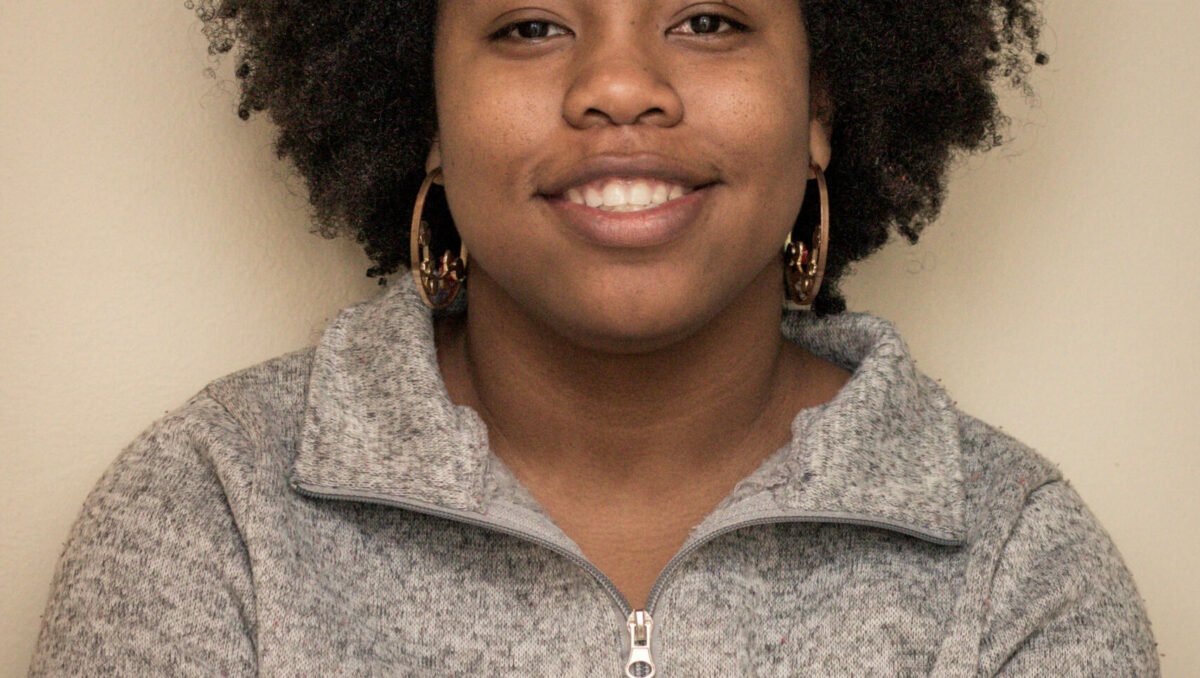
Karisma Price is a poet, screenwriter, and media artist. Her work has appeared in Oxford American, Poetry, Four Way Review, wildness, Adroit Journal, and elsewhere. She is a Cave Canem Fellow, was a finalist for the 2019 Manchester Poetry Prize, and was awarded the 2020 J. Howard and Barbara M. J. Wood Prize from the Poetry Foundation. She is from New Orleans, Louisiana, and holds an MFA in poetry from New York University. She is currently an assistant professor of poetry at Tulane University. Her debut poetry collection, I’m Always so Serious, is out now from Sarabande Books.
FWR: There’s so much that I found remarkable about I’m Always So Serious, but I think one of the very first things I was awed by was the interplay between the natural and the surreal, and perhaps more specifically, the way in which the idea of transformation is operating–like with the marigolds that overtake a New Orleans mansion in the very first “I’m Always So Serious” poem. Especially given that this first section deals so closely with the event and legacy of Hurricane Katrina, how do you see poetic metamorphoses functioning in these poems, or what particular sorts of revelations do they allow for?
Karisma Price: Let me start off by saying thank you for these wonderful questions and I’m glad to be speaking with you. “Poetic Metamorphoses” is such a great phrase. I think these poems allow me to do the type of meditating on the page that I can’t always do in real life. Throughout the collection–but especially in the “Serious” poems–I wanted some of them to have a dream-like quality, because that’s what my anxiety feels like. As a neurodivergent person, my anxiety and OCD are such big parts of my life and affect how I navigate through the world. With my anxiety and certain compulsions, there’s always that “what if” aspect that tends to be a negative thought, and I know those feelings are directly-linked to and complicated by experiencing a disaster at such a young age. The revelation I had came not necessarily after writing the poems, but from talking to people who read them. I remember talking to a colleague who read an ARC of the book and telling him how I think family and music are two of the big themes in the book (which they are), but it wasn’t until we talked about growing up in New Orleans that I realized how much “hurricane anxiety” is just as prevalent.
FWR: Who were some of your major influences on this book, literary or otherwise?
KP: Oh, there are so many! Maybe too many to name. This collection is a very revised version of my thesis that I completed as an MFA student at NYU, so much of the inspiration came from the creative work I was exposed to in my classes. But, if we’re being specific about influential poets, Gwendolyn Brooks, Lucille Clifton, Jericho Brown, Natasha Trethewey, and Terrance Hayes are the poets I tend to think of as the close relatives on my poetic family tree. Definitely my kin. I love the way they write about family, Blackness, and landscape (both physical and emotional landscape). The last three poets in the list are also Black southerners. As a southern writer, I’m glad that they meditate on what home and the south mean to them. There are so many stereotypes about the South, and it’s very disheartening when non-southerners have a flat view of us and our history. I learned about these three poets when I was still a high schooler in Louisiana, who had no idea that you could major in poetry or that MFA programs existed. My English teacher taught us their work because they were from the South, they were ours. Brown is from Shreveport, Louisiana, Trethewey spent her childhood in both Mississippi and Louisiana, and Hayes (who became my thesis advisor) is from South Carolina but lived and taught in New Orleans for some time.
As made apparent in the book, music is also a big influence on my writing–particularly R&B and the blues. As poets, we have to be good listeners, and rhythm and storytelling is ingrained in our profession. I grew up listening to old school music (my parents controlled the radio in the car), so music also gives me that nostalgia. My memories are connected to certain songs and because poetry is such a meditative thing to me, it is helpful to understand which life experiences have brought me to this point in my life. Also, if you follow old Motown and soul drama, those songs are confessions! You’ll learn which singers were doing things that they had no business doing. There’s a similar (albeit not as scandalous) confessional aspect of poetry that allows the reader to learn about the writer, no matter if what they’re saying is “autobiographical” or not.
Movies and television are also big influences on me. I write scripts and studied creative writing in college (I also took several cinema and screenwriting classes in the film department), so storytelling and writing with visuals in mind is very important to me. It’s probably why I write a lot of narrative poems. Since editing my poetry collection, I’ve been reading more fiction and learned that I really like sci-fi and dystopian media, and I’ve started writing speculative short stories. With speculative fiction, there is an escape from the confines of our reality, but at the heart of it, the characters, no matter how flawed or human or robotic they are, they’re doing what they think is necessary and often it’s a critique of our current society and the social norms we have in place.
And, as always, spending time with my family and being in New Orleans are major influences.
FWR: What was the process of putting this book together like for you? What informed the collection’s structure? In the back matter, you mention that it took six years to complete. How does I’m Always So Serious as it now exists differ from how your imagination first seeded the manuscript those years ago? Did some poems or sections flow from you more or less easily or than others?
KP: The ordering of the collection changed several times from when it was a thesis draft, but I also had other poems that I started writing while I was still in undergrad (only two of those have survived. That is a good thing. Trust me). In early drafts, the “family” poems were much more scattered throughout the collection and even the book had a different name. Ultimately, I split the book into three sections to move the reader from an individual to a collective Black history. Throughout the collection I meditate on kinship that isn’t limited to blood relation. The first section is really family heavy and aims to establish the speaker’s background and origin. The second section is very music heavy and uses figures in media and history to further analyze kinship, and gives the reader a broader view of Blackness, history, and pop culture. The third section, hopefully, feels like a mixture of sections 1 & 2 and reunites the reader with the speaker from section 1 but is not limited to one voice.
The collection now exists with more experimental forms and fewer persona poems. I’ve always been a big fan of persona and when I first began writing poems, those were the only ones that I felt comfortable sharing with my undergraduate classmates. It felt weird to have people know things about me, but I’ve since gotten over that. I think the persona poems that I left in the collection are the strongest. After I took classes on learning form (and how to break them), experimentation with the page became something I loved to do, because I think there’s an endless number of ways for a poem to “be.” I never want to stop being playful.
FWR: The title of the book is also the title of several poems within the book, generally beginning each section. What inspired you to have “I’m Always So Serious” as a refrain, and how do you see the meaning of those words informing, illuminating, and/or evolving throughout the collection?
KP: So that series started out as me writing only one poem with that title, because people always tell me that I have a serious resting face. I don’t like to think so, but apparently some people believe that, so I decided to be very playful and mock that idea. It’s funny, because a lot of my friends who I told that story to and who read my work think I’m a very calm and funny person (you know, outside of the anxiety). The original poem that started this series did not make it into the collection, because I think it was the weakest out of all of them, but I also think its purpose was to try to figure out how to write a “serious” poem. The first “Serious” poem in the collection was the second one I had ever written and I brought it to a graduate workshop class. That poem was also much shorter than what it is now. Terrance Hayes (my workshop teacher/thesis advisor) asked me during the workshop why I was cutting myself off in that poem. An earlier draft had much shorter sentences and he encouraged me to use very long run-on sentences (I love a good run-on sentence) and just say what I needed to say. He also asked why I felt the need to try to say everything in just one poem. That made me start writing multiple poems on why I’m Always So Serious (cue joke rimshot sound effect). I definitely had more to say, so I ended up writing a lot of them. Overall, I feel that the strongest and the more creative ones made it into the collection.
Because the poems have the same title, I see the repetition of the phrase “I’m Always so Serious” change from moments of well, seriousness, to whimsical, observant, self-reflective, and pointing a finger at the reader. Repetition forces someone to look at the same word again and again and give it new meaning. I hope it makes the reader think about all of the reasons why a person needs to make such a declaration, but also, I hope it makes them think about all the times that they’ve needed to say something they felt was urgent.
FWR: To refer to the book as a “love song” to New Orleans–and Black New Orleans, specifically–would oversimplify what is in fact a profoundly nuanced relationship with the city. In a book so tied to questions of chance, fate, and injustice, how does New Orleans behave as not just a locus, but as a soul all its own? Do you feel like the process of writing this book in any way changed your relationship to New Orleans?
KP: Love has its nuances, so it wouldn’t be an oversimplification to call it a “love song” to New Orleans. One of the things that was really important to me when writing this book was to make New Orleans a speaker as well, and not just a city or an object being projected on. I think writing this book made me so much more protective of my city. I was already before I wrote the book, but the process of revising the book and returning home made me think about how much it takes to survive here. I love New Orleans for what it is but also know that we deserve so much more. There’s a term called “Katrina Kids” that describes a lot of young children who experienced the hurricane in their formative years, and I definitely view life and my memories from a pre and post-Katrina lens. The culture has definitely changed. There is so much more gentrification, and it is getting very hard to live here. I want this book to show a reader–whether they’re from New Orleans or not–an honest and deeply rooted representation that is not clouded by only thinking of what the city can do for you in terms of pleasure and entertainment, but what it really means to live here and how you need to sow resources back in to the city as well. It definitely made me think much more about climate change and how a lot of cultural bearers and their livelihoods need to be protected.
FWR: And related to the soul of New Orleans, the way these poems hold and cherish Blackness, and the emotional intricacy of these poems more largely: how do you see the blues behaving as a sort of emulsifier across the book’s arc, as that which has always been uniquely capable of holding both the love that’s in sorrow and the sorrow that’s in love?
KP: I think you’ve said it right there. I feel like life is a blues song. As humans, we hold both love and sorrow in one body, and those feelings often sit with each other, holding hands. The blues is very reflective and meditative, just like poetry is for me, and I really love moments in songs when an artist does an extra run, or pronounces a certain word a certain way when singing, or when a trumpet or a saxophone gets a solo. You can elicit love and sorrow in the blues by the way a singer makes a sound, and not simply just the sound itself, if you know what I mean. I hope the presence of The Blues can be seen as a speaker guiding you through all of these lived experiences with their hand held firmly into yours telling you, this is going to be a ride. But it’ll be okay because I’m right here next to you.
FWR: On the note of the blues–let’s talk about that astonishing middle section and the poems about the legendary pianist James Booker. How did you first encounter Booker, and what called you to place his story at your book’s heart?
KP: James Booker is one of my favorite artists and a New Orleans legend. I learned about him after watching the documentary “The Bayou Maharajah: The Tragic Genius of James Booker” by Lily Keber and then listened to many of his songs. In undergrad, I took a class on writing “The Diva” and what that word means. That’s when I decided to start writing persona poems about him and his life. He was described by Dr. John as “the best Black, gay, one-eyed junkie piano genius New Orleans has ever produced.” He has his own lore surrounding him and how he lost his left eye. He was larger than life, wore capes and costumes on stage, and called himself “The Black Liberace.” James Booker, to me, represents a piece of New Orleans that has always been here: complex, mythological, talented, and Black; however, despite all his talent, he was failed by a lot of people. He was a gay Black man in the South, growing up in the 1950s-60s. He struggled with drug addiction and mental illness and after the deaths of his mother and sister, he never completely recovered emotionally. He adored them and he always said his sister was the better musician out of the two of them.
Even the circumstances surrounding his death are somewhat unknown. He was dropped off at Charity Hospital in New Orleans but no one knows who brought him there or what was the cause of that emergency. He unfortunately died in the waiting room. I’d honestly like to write many, many more poems that highlight the genius and complexity of his life. He seemed like such a talented, yet troubled human who left this world too soon. There was something divine about him and I truly think he was able to tap into that divineness when his fingers hit the keys. I wrote this in the notes section of my book as well, but in an interview, Booker said, ‘…music is actually a divine product. So, whatever song I sing—I don’t care what the message is—it’s a product of my imagination and my imagination is the result of divine imagination.”
FWR: I’m fascinated by the way form is functioning throughout this book–how the beginning tends toward primarily more traditional forms, but with time we’re brought into collapse, collision, disjunction, and even highly visual poems in the style of Douglas Kearney. What brought you to the forms we find here, and what unique liberties did you feel that some of these forms allowed or roused for you?
KP: Like I mentioned earlier, I wanted to experiment with a lot of different poetic forms, because I don’t think a poem should exist only as a piece that’s lineated to the left. I also don’t want to bore myself because I know that means I’m probably boring the reader too. Just like anything else, poetry evolves and changes, and I feel that there are so many styles that can’t be confined to a page and some that have yet to be played with/invented. Because poems have an emotional truth to them–meaning there is a separation of the speaker from the writer, and not everything written down is exactly how things happened in real life–the truth should have room to be free. I often don’t know what form a poem is going to take until after I’ve started drafting it. I start all my poems by hand in a notebook and then bring them to the computer after I start scratching things out and drawing arrows everywhere. I noticed that when I’m drafting poems, I tend to use couplets as a default form–no shade to couplets. I love them–but it’s only after I have a solid draft that the poem begins telling me how it should look.
FWR: What poem or poems from this book would you say you were initially the most terrified or resistant to write, and why? Which, if different one(s), did the finishing feel the most fulfilling or necessary?
KP: I will keep that a secret =). The readers can guess.
FWR: These poems are about many things, but grief is certainly high on that list. How do you see the act of creation in relation to that? Do you see writing, for example, as a mode of processing, an act of transformation, a balm, a record-keeping, or something else entirely? What do you feel like your poems are able to reveal about the possibilities of art for writer and reader alike?
KP: I definitely see it as an act of processing. I feel that I am much more articulate on the page than in person, and allowing myself to write or type something means that I am relying on the body, and the body relies on the muscles, and the muscles rely on the fingers and the brain and so on and so forth. I hold on to a lot of things–a little too much for a little too long–and I view poems as a place where I can sit those feelings down and allow myself to explore thoughts without fear of judgment from others. I’m not looking for another’s response or validation. I get to check in with myself.
FWR: Bonus question: What might be a question that I didn’t ask, but that you wish that I had–and what’s your answer to it?
KP: If poets got to guest star in an episode of one of their favorite shows, which show would it be and who would you play?
I’d guest star in an episode of Abbott Elementary and play a visiting teaching artist who hosts a schoolwide poetry contest. Janine would, in an effort to help, accidentally destroy all the submissions, and the two of us would go around having the students complete the largest exquisite corpse poem (it’s not as scary as it sounds, non-poets), and then declare them all winners.
- Published in Featured Poetry, home, Interview
DETROIT POETS

Oftentimes when I tell people I am from Detroit, people think of Motown or the car industry. But Detroit is a writing city. Through grit, comradery, and history, Detroit writers craft language that is some of the most stirring and resonant writing in contemporary American poetry. Detroit poets come from a legacy of Robert Hayden and Dudley Randall, while also drawing within today’s post-industrial cityscape. The writers featured in this issue bring forth the expansive experiences in a city that can feel divided and unified at the same time. This issue, like my city, is full of poems about family, grief, joy, the dozens, pastorals, and more. If allowed, I would have included many more than this small sampling of the incredible writers currently living in the Detroit area. I hope the following poems inspire curiosity in finding more work from my city.
-Nandi Comer
NANDI COMER is a poet, DJ, and educator currently residing in her hometown, Detroit. She is the author of American Family: A Syndrome (Finishing Line Press) and Tapping Out (Northwestern University Press), which was awarded the 2020 Society of Midland Authors Award and the 2020 Julie Suk Award.
Featuring the work of:
- Published in Featured Poetry, home
TWO POEMS by Leslie Sainz
SUNDAY, WOUNDED
For The Ladies in White
The walls of Santa Rita swell like a capillary.
Hundreds of mother-wives,
dressed as doves,
recite their reasons:
For the steel-held.
Para la malasangre.
To argue on behalf of ghosts.
Outside the church, men
with bladed knuckles
intimidate for sport.
They lean on their old, rectangular cars,
make smoke on command.
When mass is finished, the mother-wives take
to the streets.
They move about Havana the way a fly enters a skull—
every step a vigil,
every breath surveilled.
¡Libertad! ¡Libertad! ¡Libertad!
They link hands and birth a prism.
The men open like cylinders.
¡Libertad!
¡Libertad!
¡Libertad!
Howls between blows. Flesh
folding into itself like a flag—
white, reddened.
The women that escape
are followed, placed
on 24-hour watch.
The tongueless republic,
unable to lick its wounds,
does not sleep.
LAS GUAJIRITAS
We know the sun to be a man. We know Hell
has many mouths, too many teeth to count. Fire—
we’ve heard it by name, seen the cane leaves blunted
to ash. Smoke like the inside of a throat,
our throats dry, dry, drier.
We are so young, us girls.
The node of light between our legs still intact,
yet we wield our knives with accuracy.
Close to the ground, and saw. Do not hack.
Keep only the green shoot. Store as you go.
Our backs bent and clotted. Our eyes, starless.
We suck on our blisters for drink.
When all is done, we mustn’t forget the roots.
With a blanket of whittled straw, the cane will sleep
till next season. We try to sleep, too, our bodies tenderized.
Some nights, we manage to dream:
sprig-thin fingers holding shovel to earth, the sky a parade of red.
No mothers, no fathers. Just a voice, heavy as myth, saying
It’s not that far from here. You could use your hands.
- Published in Issue 14
THE PAYPHONE by Joy Priest
Disappeared from the landscape.
Slick & black in the Tangerine Diner
Where I stood to speak into the handpiece
Greasy with other people’s oil & spit.
Gone that day’s newspaper, boot-printed,
The dog walking itself leash-in-mouth
Down the small avenue, the bookstore
Where I felt the train rumble past
On the other side of the wall. Gone
Those old men I watched smoke at their stools
& the bloodsucking bug I smeared in sweat
Until it was only blood. I am obsessed with
What’s phantom: the younger self;
The angry & agile body, starved & able
To consume indiscriminately;
The gently-pumping vein.
The operator had everyone’s number
At her fingertips back then. Who remembers
The sensation of the rotary dial whirring
Backward? Who of us keeps the record
Now? Outside of the gardens the smartphone
Missed my back pocket, smacked
The ground. Gone its face, diamonded
Into uselessness. No way to get ahold of
A way home. I hummed along while I waited
Across from the jukebox, in the booth
Ripped from its button, scratching
The back of my thigh. Gone the wild weeds
& Honeysuckle air
That made me. The coin slipped
Into its dark slot.
- Published in Issue 14
INTERVIEW with Kyle Dargan
Kyle Dargan is the author of five collections of poetry: Anagnorisis (TriQuarterly/Northwestern UP, 2018). Honest Engine (University of Georgia Press, 2015), Logorrhea Dementia (University of Georgia Press, 2010), Bouquet of Hungers (University of Georgia Press, 2007) and The Listening (University of Georgia Press, 2003). He is the recipient of the Cave Canem Poetry Prize, and the Hurston/Wright Legacy Award. He lives in Washington, D.C., where he works, writes, and edits POST NO ILLS Magazine. Originally from Newark, New Jersey, Dargan is a graduate of Saint Benedict’s Prep, The University of Virginia, and Indiana University.
FWR: “Anagnorisis” is the moment in a tragedy where a character realizes his or her (or another’s) true nature. I was struck that your poems consider not only your realization of yourself, but also your realization of America, and what America thinks it knows about you. The first section of Cornelius Eady’s Brutal Imagination came to mind as a possible influence, but I wonder what other works you turned to in the shaping of this manuscript.
Along that thought, you’ve said that this is a work expressing “the freedom of speak”. Can we hope that America, the idea with the capital A, is listening?
KD: I appreciate your picking up on the multiple “recognition” moments throughout the text. I know the term anagnorisis leads one to look for one such moment, but the idea is at play in different parts of the book’s journey. If I can interpret text loosely enough to include more than books, I would definitely say Solange Knowles’ album SEAT AT THE TABLE (which was, interesting enough, inspired in part by Claudia Rankine’s CITIZEN). Whether or not America is listening doesn’t matter. I had to accept, as did Solange, that making art that clearly and unabashed depicts blk disdain and exhaustion –– and not as a function of either rage or woundedness –– will likely not be embraced by the popular critical and awards entities. (The lack of critical acknowledgement for A SEAT AT THE TABLE remains egregious to me.) But you have to do that sometimes to move the popular American consciousness towards being open to and able to process righteous, necessary and crisply articulated blk indignation. Or even just the belief that “white” America is not doing the best job at exorcising its own demons. This is not a book that was in my existing creative plan, and some days it really does feel like a “service” to me –– one that I am more likely to get tacitly maligned for by the artistic gatekeeping class.
FWR: In structuring the manuscript, how did you find balance between shorter and longer works? You’ve said that this wasn’t a ‘planned’ manuscript, like your other books had been. At what point did you realize what you had could, and needed, to stand on its own?
KD: Well, there was a point where I thought “In 2016, the African-American Poet Kyle Dargan Is Asked to Consider Writing More Like the African-American Poet Ross Gay” was the centerpiece of the manuscript (that was probably more of an emotional truth than a craft truth). So I knew that piece –– running about six pages –– needed space to function, somewhat as “Always a Rose” does in the center of Li-Young Lee’s ROSE. That aside, though, these poems are, on average, a lot longer than the poems in my previous four collections. I think that is related to my push towards a new depth of candor in my voice. There is a relentlessness to the opening section –– a weight –– that I wanted to be unavoidable, to go back to that idea of “training” readers’ consciousness. You have to deal with the first section just as I, and many other people of color, have had to live it over the past five years. I do let in more “air” as the book/journey progresses.
FWR: The “China Cycle” poems seemed to serve two purposes. The preceding poems were cast in a new light, as the speaker (and audience) consider the way both China and the United States are continually editing and creating the myths and history of each nation, while also establishing a new angle on the succeeding poems by bringing in more fully concerns of humanity’s impact on the natural world. When you wrote those poems, had you envisioned them as their own manuscript? If not, what was the act of joining them with the rest of poems like?
KD: There was a lot about my travels to China that, until recently, I was still processing. Even just the decision to write things that I would potentially publish, for as much as I am extremely appreciative of how I was hosted and treated as an American by the Chinese Writers Association (which is an arm of the ruling Communist party), I also was very aware of how the government was surveilling and detaining their own dissident writers and artists. To not say anything felt disrespectful to those silenced writers, and to speak candidly felt disrespectful to those who’d hosted me. But once I got over that, it was clear that China was the “bridge” for me and the book. It was both the place I escaped to in a psychically trying time as a blk American, and the place that showed me my American privilege and my inability to escape global colorism and its political ramifications. So what you stated about the “reconsidering” those poems encourage in the manuscript, that is exactly what I experienced in thinking about and having to explain my life in America to others as I traveled abroad.
FWR: Within the “China Cycle”, the idea of being ‘other’ takes on new meaning. While a poem like “A Progressive Mile” points with one hand to the act of being visibly a “dark/spectacle” in China, it also recalls the lines “I’m still trying to buy/ the same stitch of citizenship/ you take for granted” from “In 2016, The African-American Poet Kyle Dargan is Asked to Consider Writing More Like the African-American Poet Ross Gay” or “I think of race as something akin to climate change, / a force we don’t have to believe in for it to undo us” from “Daily Conscription”.
How do you see your poems speaking to the role of “the other” and the act of being made visible or invisible?
KD: So I honestly think that writing about feeling racially othered in a general way has reached the limits of its rhetorical usefulness. (And I may be totally off in thinking that.) There are many experiences of otherness from China I did not bother to attempt to render as poetry because, am I wrong, of course in 2018 the reality of a blk man in Tianjin China who speaks a little Mandarin is going to register as an oddity. What is more interesting to me at the moment is not what the “other” feels but what desires and anxieties fuel the actions of those doing the othering. That is what is happening at the end of “Progressive Mile.” It is quasi erotic, or maybe fetishistic the way in which he is staring at me. And only he really knows what’s up, so how do I get in there –– into his head? That is what I am examining now. I’d say that dynamic is true domestically as well.
FWR: Thinking of the performance of the body, I was struck by your use and manipulation of pop culture references, such as the opening epigram to “Dark Humor”, which quotes Richard Pryor, or “Avenger”, when you write:
Somewhere is the negro’s imagined America,
where we have Iron Man on our side,
though it does not matter if the hero is “black”
so long as the body inside is.
That poem, in particular, which contains Ferguson, Obama, and Tony Stark, struck me as an attempt to answer the multiple ways people of color are called upon to adjust to the expectations of whiteness, without the release that whiteness grants itself. Would you be able to speak further to this?
KD: Well, it is really an imagined Eric Holder cast as a Tony Stark figure, but yes. I think the sentiment you mention is present in that poem, but I think it is more –– or more interestingly to me –– present in “Poem Resisting Arrest.” I remember when I showed the book to a mentor, one not raised in America, he did not understand the poem because he could not identify the resistance, but that is the point. That blk people bend themselves backwards often to avoid abuse by the police, wind up abused or even dead, and are then further abused or criticized for asking why they have suffered this fate. (“Why” is one of the most dangerous questions a blk person can ask an officer.) But I think that goes back to Iron Man and the “negro’s imagined America.” Even there, the police, the State, is too corrupt to be imagined as a benevolent force so it has to be a superhero that fulfills the duty the State should fulfill –– i.e. protecting the innocent.
FWR: I know you teach writing across several genres. How does that influence your own writing?
KD: I think of myself as a learned unlearner, which puts me in a weird position as a teacher in the creative writing classroom. I think my way into craft through martial arts because I appreciate the clarity of high stakes arts (i.e. in some instances you live or you die depending on your craft decisions). That is, I believe, actually freeing because if your main goal is to fight to live, your cannot be stiffly, strictly beholden to styles and forms. It is the ability to transition between forms as needed which lead to success. Because, as they say in NARUTO, every jutsu (technique) has a weakness. So I teach, as Bruce Lee suggests, not knowledge of form but lived performance of fluidity. And I think that is something that one models more than one teaches to others. Thus I need to be continually striving for that –– and getting freer in my necessary formal transitions –– in my own work. One of my former students wrote me to say that reading ANAGNORISIS was like taking an intensive on lineation / line breaks. While flattered, what I really hope they see are the ways I am trying (and failing and trying) to achieve more effective fluidity when it comes to form.
FWR: Is there a poet (or poems) you love to teach or share?
KD: I’d say, to the above idea of moving as freely or as purely as the poem needs, pieces like Lucille Clifton’s “Won’t You Celebrate with Me” or Larry Levis’ “Picking Grapes in an Abandoned Vineyard” or Etheridge Knight’s “Belly Song.” There is really little for me to even teach with those works. You just need to internalize them and allow them to inform your own instinct.
FWR: (this is purely a NJ question, as someone else from that great, maligned place that I’ll never live in): Can we call Walt Whitman a New Jersey poet, as we’ve named a rest stop in his honor?
KD: I don’t think any one place can comfortably or wholly claim Mr. Multitudes. (The bridge even is operated by the Delaware River Port Authority––a Delaware/Jersey collaboration. And Jersey’s turnpike is one of its most hated aspects, so I don’t know how much of an honor the rest stop is.) Maybe Brooklyn can. And D.C. I’d rather New Jersey reconcile its relationship to Amiri Baraka than make space for Whitman. I think that is the problem, poetically with Jersey––and why so many of us don’t or cannot go back: it is often looking elsewhere for the genius when it is already right there going ignored in its own garden.
TWO POEMS by Vandana Khanna
CREATION MYTH
This is how the whole holy mess
went down: cue the girl in tone-deaf
gold, drama thick in her blood. Their
love always caught in the underworld
or the other world. All vendetta and Vedas.
She woke from dreams silted with arrows,
broken teeth, the man-smell still sharp
and human on her. The birds nearsighted
with melancholy. Her heart wintering
over some god she’ll probably never
see again. He tells her to play dead, that
no one will notice— just another girl
from some hill town with her lotus-petal
eyes walking into a forest on fire.
SELF PORTRAIT AS A GIRL, ONLY PART MIRACLE
This air full of birdsong and chatter,
this girl only part miracle. He as the god
with many heads whose tongues swell
from all the lies pulled from them—
one thorn and nettle at a time.
He as a reminder that sweetness
is only a prelude to pain: what he
couldn’t love, he sent back out
into the jungle, let the animals
have at it. This: the price of freedom.
This: the remnants of love. Your mother
tells you over and over — don’t be just a girl.
You wish she’d teach you something
that would make you belong to this world.
- Published in Issue 14
MIRROR ROOM, MEHRANGARH FORT by Chloe Martinez
Jodhpur, Rajasthan
You live in a high fort above a blue city. The rooftops below
speckled with laundry. At night the distant echoes
of a hundred brass bands, a hundred weddings. The blue
of the city is not quite robin’s egg, not exactly
the blue of chicory. Outside the city is the desert.
Don’t tell it like a story. It will sound too beautiful.
You stand on a high parapet, in the rustle and coo
of pigeons, under filigreed eaves. When you step over red
velvet ropes, leaving the museum behind, you find rooms
empty as the moon, floors carpeted in desert silt.
In one bedchamber-turned-cave, you hold your breath, you bow
before a rank hill of bat guano. You touch niches
for the ghosts of little lamps, and frescoed girls dance
with gods along the wall. Plaster dusts your fingertips.
Stained glass windows turn your thin skin rainbow. You take
a photo of a white hallway: Mughal arches echo, fade into
light. Not a story, not an image. It is a map. At the end of the hallway,
a balcony—the ground hazily distant—the wide-winged
turkey vultures gliding so close—hold tight
the railing, notice how soft the sandstone carved
into curling vines. Notice it is crumbling. Mehrangarh means
Sun Citadel. Sheesh Mahal means Mirror Palace, or else
Hall of Mirrors, but it is just a tiny space, dim, claustrophobic
with reflections: wild, intimate room, it wants an audience.
Here you are, alone with your ten thousand selves.
- Published in Issue 14
SELF PORTRAIT AS A POETRY BOT by Zohar Atkins
Alumnae of the Void,
we measure our loyalty
in clicks and non-fungible
donations.
We measure our loyalty
against our guilt of never
being enough,
never opening email.
Against our guilt of never
showing up, or as we say
in today’s culture,
making ourselves visible.
Showing up, or as we say
Leaving Egypt,
meaning a world
without fanfare.
Leaving Egypt,
we are like stars
leaving daylight
to become markers of night.
We are like stars
whose arrival designates
the time of comparison
between priests and beggars.
Whose arrival is called “Creation”
and requires a red carpet
of interpretation
or no carpet at all.
And requires a red carpet
of wonder
at how such terms formed
an encyclopedia of misdirection.
Of wonder
we are but a satellite,
an off-shore account
waiting to be dissolved.
We are but a satellite
and yet are we not also a center
whose periphery is wonder?
Waiting to be dissolved
an encyclopedia of misdirection
or no carpet at all
between priests and beggars
to become markers of night
without fanfare
making ourselves visible
never opening email
who can say
we are not loyal alumnae
clicking, donating our being
to some Void
some Egypt of guilt and wonder.
- Published in Issue 14
TWO POEMS by Alfredo Aguilar
ONE WAY IN—ONE WAY OUT
during the fire, i thought only of closed roads—
lines of cars redirected to find another way
in or out. while the mountain above them burned,
a couple jumped into their water tank to save themselves.
i turned on every sprinkler & placed a few on the roof.
i sat on top of my house, dry terrain on all sides,
breathing the ash-rain & smoke. perhaps i should have
been more concerned. perhaps i should have packed
my letters & left. perhaps i was too cavalier.
i thought myself willing to go down with the house.
it was in fact, not bravado, but a life that did not know loss.
on an old ranch, when the stables caught fire
& there was no chance of rescuing them, all the horses
were loosened. i imagined them wild eyed & panicked.
a stampede emerging from a smoke cloud. the sound
of hooves—an unsaddled stream rushing out
in a single direction with nothing but their lives.
AUBADE
my eyes were bloodshot
from finding spare hours
in the curve of your
collar bone.
you drove me to a flight
& said you hadn’t seen
a sunrise in months.
the sky—a pool
of crushed hibiscus.
i wanted to swim in it
with you. we were quiet
the way anything that leaves
is quiet. you promised
to find me
& i closed the door.
parting is never
the ceremony we wish
it were—someone is there
& then they’re not.
i sat in a terminal
& felt the sun
through large windows.
i thought of your hand
squeezing mine in sleep.
how one night you turned
away from me so that
i wouldn’t see you cry.
& later beneath a blanket
we hummed lullabies
to one another.
you placed me
in a cold empty sky not
because you wanted to,
but because i asked you to.
- Published in Issue 14
FOR ANDREW by Jackson Holbert
When it was too hot
to smoke cigarettes we drowned
ants in gasoline
until they curled. Upstream,
in a trailer, your mother, drunk
on hand sanitizer cut with water,
called each kid
for pasta.
It’s April. You are dying
among the poplars
among blueberry fields and farmhands
beating chickens with pipes.
When we travel
the dead travel too.
That is the law
and the law is full of dreams.
The news says
wildfires are burning
all over the county.
I wake
from the couch I’ve been sleeping on
for weeks. I put
cold water to my face,
blow ash off the deck
with a hose. I sit
in the yard and close my eyes.
When I left that town
I left for good. I dreamed,
rarely, of streams, of blackbirds. I drew
everything we did to the trees, everything the trees
did to us. I drew it badly
and spent years trying
to draw it well. Eventually
I stopped.
- Published in Issue 14
FEMININITY AS A MATH PROBLEM IN AN ATTEMPT TO SOLVE FOR X by Kelly Grace Thomas
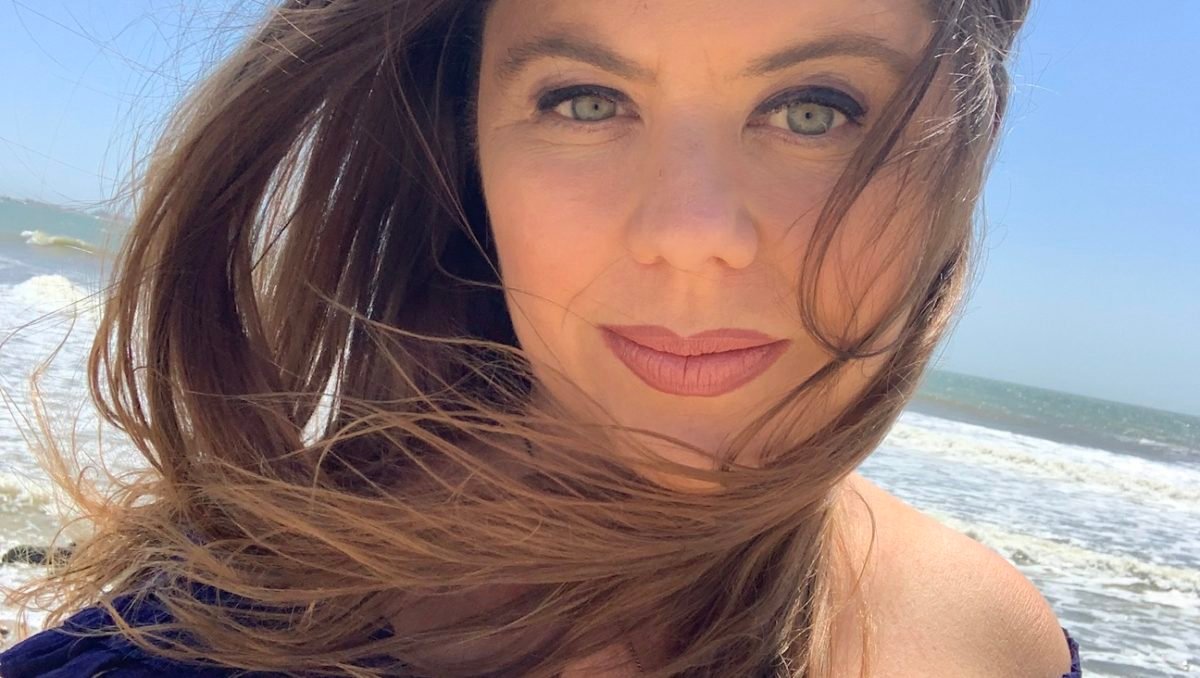
after Linette Reeman and torrin a. greathouse
MATH PROBLEM
The body is a betrayal you are forced to carry
POSSIBLE ANSWERS
Don’t say the word father
OR become a slow crawl of thigh highs
OR let each be your god
Divide all possible solutions by Remember this was your idea
Theoretical Math Problem – TRUE OR FALSE
When solving for y the answer to diet pills is more diet pills
The word genetics is a mean hammer
The difference between shame and guilt is showing your work
MATH PROBLEM AS MAP=
You are the smallest place you know.
Possible steps to solving for y (you)
1. Give back the rib
2. Eat every apple until you are fat with orchards
3. Dress in snake and dig a grave
(there no use for girls who think themselves vessel. They should never expect to float)
MATH PROBLEM, v. 2.0=
Russian nesting doll
daughter (into)
wife (into)
mother (into)
Find the lowest common denominator.
Divide the fractions among many mouths
IDEAL ANSWER
Tell the junior at UCLA you have the answers + use words like better now + walk her to her car.
(Do not say the hunter never sleeps) x (Do not tell her, like you, she will always be hungry)
= Do not tell her there is no X = Or worse, that each of you are cause.
POSSIBLE ANSWERS
Your mother laughed when you disappeared + you are still suspect + so is she
ACCEPTABLE ANSWERS
you have not finished disappearing + you are still thirsty for bones
MATH PROBLEM IN REVERSE
Unbuild the boat
Write letters to kerosene
Have X solve for you
PROBABLE ANSWERS
There is nothing special about a body
AND You keep on carrying
- Published in Issue 14