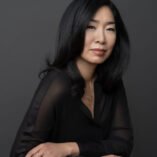
To read LION, the latest book by celebrated poet Tina Chang, is to enter into what feels like a throat clenched into a howl. Arguably her most ambitious, the fourth book of the former Poet Laureate of Brooklyn explores the death of creative producer Christina Yuna Lee during the coronavirus crisis through ekphrastic engagements with Asian and Asian diasporic female artists whose work also grapples with violence against Asian women, while at the same time exploring the myths and intimacies of an identity often rendered invisible by Western society. At once a roar and whisper, LION follows Chang as she traces her lines of women back to their roots – which never end – and finds herself mirrored there.
Tina Chang is interviewed by associate poetry editor Nicole W. Lee.
FWR: I wanted to start by congratulating you, Tina, on your fourth book! It’s such a voracious book, incorporating art, myth, motherhood and lineage, while also interrogating the violence that’s so often directed at Asian women, in societies that can be hostile to us, both in America and across the wider world.
Jumping off from this point, I wanted to start by discussing the idea of the Asian female, as often understood in the West, as rendered passive and invisible. Many poems in this section grapple with this perception, for example, the poem “Self-Made Phantom” begins with the line “I am told over and over to be less than me.” Later the poem states, “I am destined to be brutally seen,” while the poem “Selective Seeing” notes: “By virtue of being Asian American and a woman, she was often watched in her daily routine, though her duties and contributions were barely noticed.”
I’m intrigued by this phenomenon – and co-opted by it. As an Asian female myself, I find that the instruction to be “less than me” is often perpetuated not only by the wider Western world – who through an Orientalist lens either position us as passive subjects to be dominated, or tiger women to be feared – but also from within, from the people closest to us. This second pressure arises, I suspect, partly out of cultural norms, but also inherited trauma, fear of external threat, and the need to protect our Asian daughters from those threats. And yet, in the events of this book, this fear does play out. One of us – Christina – is murdered. I’m guessing that her death was the spark for this book – an interrogation of the Asian female and her place in American society – however I’m curious about its earlier stirrings. When did these feelings of invisibility start for you? Who or what made you feel that way, and how and when did they come to the surface in your poetry?
TC: In the pecha kucha, “Tangle” there is a stanza that reads
My mother stood before her mother as she departed
Taiwan for America, letting go a country where
she was subdued, for another where she was invisible.
She gave birth to an invisible daughter, who ate
the seeds of this country, who daily grew
into a semblance of her own masked face.
I think I felt invisible in America before I was born. As a young girl in the Western school system, I was shy, studious, artistic. I thought that to be quiet would keep me safe and I also equated it with obedience and excellence. To be without sound led to feeling unseen which is not what I had strived for. I noticed the more pronounced people’s voices were, the louder their volume, this signaled confidence. I began to feel the most visible when my inner voice began to find power on the page. Teachers noted aspects of my writing they liked. Other teachers began to see a future for me in writing. As a fledgling writer, though, I found very few writers who looked or sounded like me in the books I studied. My formal education consisted of writers who confirmed my stance outside the literary canon. I was not exposed to any Asian American writers until I graduated from college and, through my own effort, found the Asian American Writers’ Workshop in New York City. It was there that I stepped fully into my visibility.
I met Asian American writers who were confident, bold, loud, gifted, original, unapologetic, and collaborative and as I began to know them and as we became a community in New York City, I felt my confidence grow like an image on silver gelatin paper that gradually comes into view in a dark room. I went from feeling like a ghost to feeling fully human.
FWR: The book is also interested not just in Asian women but in the connection between herself and her mother and daughter. Throughout the book there are many references to the speaker’s mother, the speaker herself who is a mother, and the speaker’s daughter, forming a kind of intergenerational triangle between the three of them. This reflexive circularity seems to be an important connecting thread, as it allows for the speaker to reflect on herself, her daughter, and her mother, with each relationship becoming a mirror through which the others are understood. For example, “Versions of Girlhood,” the speaker laments about missing her daughter’s “past self” and that the speaker is now “the woman who made her, the woman / so hard to love now, at times bitter to the bone,” while in “Lineage” the speaker says “I am knowing my mother / through this [the speaker’s daughter’s] gentle body.”
What’s intriguing to me is that the speaker also extends this idea of female connection that goes all the way back to an endless “root,” by connecting herself to a lineage of women. In “Lion,” the speaker says: “My mother was a mother of mothers, / modern before she was ancestral,” and throughout the book there are references to “the multitude of women we inherited.” I’m curious what this wider sense of inheritance and belonging means to you, particularly in relation to the intimate relationships between mothers and daughters?
TC: Coming from a family that immigrated to America, I clung to lineage. Since most of the men in my family died well before the women, I saw the women in our homeland of China as very strong, capable, and resourceful. My grandmother, in particular, was an impossibly tough person. Growing up, I recall staring at her bicep, which had a large part of it missing as if an animal had bitten through it. Though it had long healed, she told me the story of cutting off a part of her arm to feed a relative who was ailing. She was only a girl when this took place and I imagined the kind of strength it took not only to survive but to ensure the survival of others.
Similarly, after my own father died, I saw my mother strive for our livelihood. She was willing to send us to Taiwan to live with relatives while she struggled alone in America to build a stable home life for us. So there was a conflict between quiet and strength, between cooperation and persistence, between bravery and vulnerability. These contradictions were difficult for me to understand yet I knew they were possible within the bodies of women. The lion, then, became a symbol of power and sensitivity, strength and submission. The relationship between mothers and daughters is the power of insistence between the past and present. Rooted by culture, time, memory, the tangle of grandmother, mother, and daughter builds an indestructible ancestral bond that resists the cruelty of oblivion.
FWR: Coming back to the idea of the Asian female in Western society, I wanted to explore the other side of the coin – the Asian female as tiger woman, to be feared. It’s interesting in this book that the so-called tiger woman is present in the speaker – she’s simply inside the woman who appears invisible. Within the invisible Asian female speaker is desire and yearning in the shape of lions, gazelles, beasts, bats, jaguars, wolves, and the mythical creature of the chimeras – and a lion, with an insatiable desire chewing “into the wreck of the world.” What was the impetus to explore this hidden ferocity and wildness within the speaker through such powerful animal imagery?
TC: Growing up, I was intrigued by the stone lions that I saw on other side of doorways. In some versions, they were Foo dogs, in other versions they were part dragon, part tortoise, part serpent. I love hybrid animals, dream animals, impossible animals, beings that can only exist in the expanse of the imagination and in Chinese tradition, the lion is a myth.
Because the reality of living can be so painful, because an Asian American woman such as Christina Yuna Lee or Michelle Go can one day be here and the next day are erased, my mind can only dwell safely in the imagination.
The lion is traditionally male but I was more interested in channeling its ferocity and its mastery of survival in environments that may not support its preservation. I was interested, also, in the body of a woman inhabiting that traditional male vocabulary, demanding a space for her existence.
FWR: As mentioned at the beginning of the interview, the book is also ekphrastic, in that it engages in the work of Asian American female artists including Christina Yuna Lee herself, Astria Suparak, Hồng-Ân Trương, Haena Yoo, Hong Chun Zhang and Joeun Kim Aatchim. I love the engagement with art, and found each encounter especially moving, as they built on each artist’s work to expand the world and to deepen the exploration of violence against Asian women. I found “Tangle: A Pecha Kucha” which interweaves the hair art with prose text especially moving, as the text and drawings seemed to speak to each other, forming a new, integrated text. Other than their engagement with violence against Asian women, what drew you to each of these artists and their work?
TC: After Christina Yuna Lee’s murder on February 13, 2022, memorials were placed outside of her home to honor her memory. The memorials were continuously destroyed, adding to the damage and lack of safety Asian Americans were feeling at the height of anti-Asian hate crimes. As I began to research the life of Christina as a way to understand more about her life as opposed to the record of her death, I located an art exhibition at the Eli Klein Gallery where Christina worked for four years. The gallery built a memorial in the gallery for Christina that couldn’t be destroyed and nine Asian American women artists contributed their work to the exhibition, curated by artist stephanie mei huang, called with her voice penetrate earth’s floor, after a line in Dictee by Theresa Hak Kyung Cha (who was also brutally murdered in New York City in 1982):
“Hollow depression interred invalid to resurgence, resistant to memory. Waits. Apel, Appellation. Excavation. Let the one who is diseuse. Diseuse de bonne aventure. Let her call forth. Let her break open the spell cast upon time upon time again and again. With her voice, penetrate earth’s floor, the walls of Tartarus to circle and scratch the bowls’ surface. Let the sound enter from without, the bowl’s hollow its sleep. Until.”
–Theresa Hak Kyung Cha
This quote was a calling, I believe, to Asian American women and to anyone whose existence teeters on the brink of invisibility and erasure. I was intrigued by each woman artist’s inner life, their visions, their dreams and I began to engage with their artwork, responding in the form of poetry. This felt life-giving.
If I’m participating in the act of creation, I’m participating in my survival.
While Hồng-Ân Trương’s work focused on the surveillance of Vietnamese women during the American war in Việt Nam, Haena Yoo’s origami sculptures were created from newspaper articles dipped in soy sauce and crafted into the most commonly used guns in America: the rifle, pistol, and revolver. Astria Suparak’s work concerned itself with Asian futures without Asians in mainstream cinema. Visual artist Joeun Kim Aatchim concerned herself with visions of the lion and Korean folktales and fantasy while Hong Chun Zhang focused on hair as political, social, ancestral anchors of historical and personal narratives.
In times of deep grief and even artistic collapse, I felt energized and inspired by the work of these powerful artists, one who was Christina herself whose artwork is featured in LION. I wrote poems in response to their work and only when I was almost done with the book did I contact each living woman artist to conduct conversations with them and to ask them for permission to collaborate. This may be a counter intuitive and backwards way of writing a book but I was heartened and even saved by the conversations we had. The discussions were charged and emotional as we talked about safety, danger, and our worst fears coming to the forefront during the pandemic. After each encounter, my work changed, contributing to the communal life of our collective imagination.
FWR: I know I’m rather obsessed with zuihitsu in interviews, but I’m genuinely intrigued by how each poet engages with the form in their own unique way! There are two zuihitsu in this book: “Motivated: A Zuihitsu” and “Heartbeat: A Zuihitsu,” both featuring a mixture of poems, journal entries, etymologies, road test reports, emails, quotes, myths, and subway maps. While “Motivated: A Zuihitsu” follows the speaker after the murders of Michelle Alyssa Go and Christina Yuna Lee during the pandemic, “Heartbeat: A Zuihitsu,” explores [the illness] of the speaker’s mother and the birth of the speaker’s daughter. I’m curious as to what drew you to the zuihitsu to explore these topics? What could the zuihitsu hold that a traditional poem could not?
TC: I grew up in an environment that was not always friendly to my imagination. I was taught all the poetic forms, predominantly European and male. As I became more conscious of forms as a path to freedom, I sought female Asian forms/genres and the zuihitsu is one of them. Translated from the Japanese language meaning, “following the brush,” the zuihitsu originated in the late 10th century beginning with Sei Shōnagon’s The Pillow Book and largely introduced in the U.S. by poet Kimiko Hahn. The zuihitsu can absorb essay, prose, poetry, dream, diary, to do lists, visual art and even emails and texts. While some may argue against this all-consuming movement of the genre I think it’s important to note the empowering tools it provides women writers and its ability to acknowledge and push against traditional standards. While I’m indebted to the sonnet, villanelle, sestina, and all the poetic forms that have instructed me and made me attuned to music and accuracy, the zuihitsu offers me a vision of liberation as it possesses no strict form. Kimiko Hahn described it as “a fungus” in its ability to grow and evolve. I think of it as air that moves through all forms, welcoming what comes before it, creating an organic space for thoughts to thrive.
The zuihitsu seemed like a fitting and natural genre to reflect on friction, opposing forces, and the cyclical encounters with life and death. I felt unencumbered by genre/form and I was free to experiment and play, especially when the subject matter was weighted. I could explore very difficult subjects and perspectives of multiple figures while delving into inner, lyrical explorations of self in private and public realms. The challenges of expressing myself and the interiority of the struggle with identity, immigration, family, and the world that threatened to rupture or displace me, had a partnership with the zuihitsu and that creative exploration sustained me at a time when my very existence seemed tenuous.